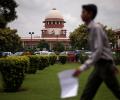
Chief Justice of India DY Chandrachud on Thursday said the Supreme Court has onboarded the National Judicial Data Grid (NJDG), a repository of data on pendency and disposal of cases right from taluka to the national level.

The NCERT's class 8 textbook is under scrutiny for its content on judicial corruption, potentially leading to its removal after government concerns and objections from the judiciary.

A new report, "India Justice Report 2025", highlights the stark gender disparity in India's police force, with less than 1,000 women holding senior positions like Director-Generals and Superintendents of Police. Despite growing awareness about the need for gender diversity in law enforcement, not a single state or Union Territory has met its target for women's representation in the police force. The report also emphasizes the significant challenges faced by the justice system as a whole, including infrastructural deficiencies, overcrowding in prisons, and inadequate staffing levels. The report calls for systemic reforms to address these issues and ensure a more equitable and accessible justice system for all.

The number of undertrials is at a historic high and comes at a time when vacancies in the judiciary -- across the lower courts, high courts, and the Supreme Court -- remain high.

"We have prepared a broad platform where we have assessed the top 50 judges of the country who would be considered for appointment to the Supreme Court of India. We have data on judgments and the quality of judgments. The idea is to make the process of appointment in the Supreme Court more transparent," the CJI said.

As the judiciary tries to tackle rising pendency of cases, latest figures show that cases filed last month across India were more than the number of litigations disposed of.

The CJI said the higher judiciary is getting 'flooded' with bail matters because of the reluctance at the grassroots level to grant bail.

Justice Chandrachud said unlike many countries, India's Constitution was forged by Indians here in New Delhi

The three initiatives are - pro-bono legal services, tele law and Nyaya Mitra

The Supreme Court Friday asked the Chief Justices of all high courts to use information and communications technology (ICT) tools to ensure that the access to justice is 'democratised and equitably allocated', saying as per the National Judicial Data Grid (NJDG), over 91 lakh bail pleas are pending in high courts alone.

Over two crore cases are pending in the country's lower judiciary, out of which more than 10 per cent have remained unsettled for over 10 years, latest Law Ministry data says.

The PM said that the Supreme Court has conducted the highest number of hearings via video-conferencing in the world during the coronavirus pandemic.

Are breakthroughs on this imminent, asks Ajit Balakrishnan.

Unless the judges factor in the ungovernability of technologies and their beneficial owners, present and future Presidents, prime ministers, judges, legislators and officials handling sensitive assignments may become redundant with reference to their age-old roles for securing 'national resources and assets', warns Dr Gopal Krishna.

Private detectives forge relations with policemen and unsuspecting people in telecom companies, as they have access to call data, says Sahil Makkar

Isn't National Intelligence Grid and UIDAI engineered by vested interests, asks Gopal Krishna.
 © 2026 Rediff.com - Advertise with us - Disclaimer - Privacy Policy - Sitemap - Feedback - About us - Terms of use - Grievances